


THE CHALLENGE
Limited access to finance constrains growth for viable SMEs.
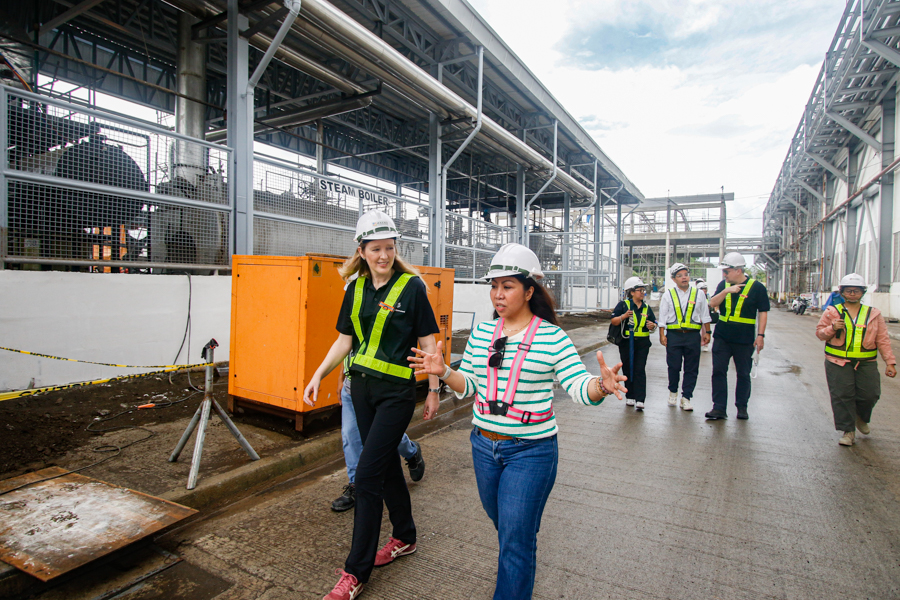
Small and medium enterprises (SMEs) drive job growth across Southeast Asia. Yet many high-potential firms struggle to secure financing to scale. This gap limits expansion, hiring, and market entry—especially in sectors such as food, services, and light manufacturing.
Investors also face constraints. They often lack access to a strong pipeline of investment-ready firms. Data gaps and limited market visibility can make it harder to assess risk and identify viable opportunities.
Governments and development partners in the middle face a practical challenge: How to mobilise private capital at scale while improving market transparency and business readiness.
THE APPROACH
Targeted partnerships connect capital with investment-ready businesses.
Through the Abt-managed Investing in Women (IW) initiative, Australia partners with investors, businesses, and ecosystem players to catalyse investments into SMEs in Indonesia, Myanmar, the Philippines and Vietnam. Since 2016, IW has deployed capital into funds that invest in SMEs while also supporting the entire ecosystem through peer-to-peer learning, case studies and industry data.
One such example is in the Philippines, where IW has partnered with non-bank financial institution ARQ SME BDC (ARQ). IW’s patient capital has allowed ARQ to test innovative financial models that specifically meet the needs of scalable small and medium enterprises, helping them grow and go on to raise larger pools of capital. ARQ seeks market returns and thus prioritises firms with strong fundamentals—typically those with stable revenues, assets, and established workforces.
THE RESULTS
Early investments show strong signals for growth and job creation.
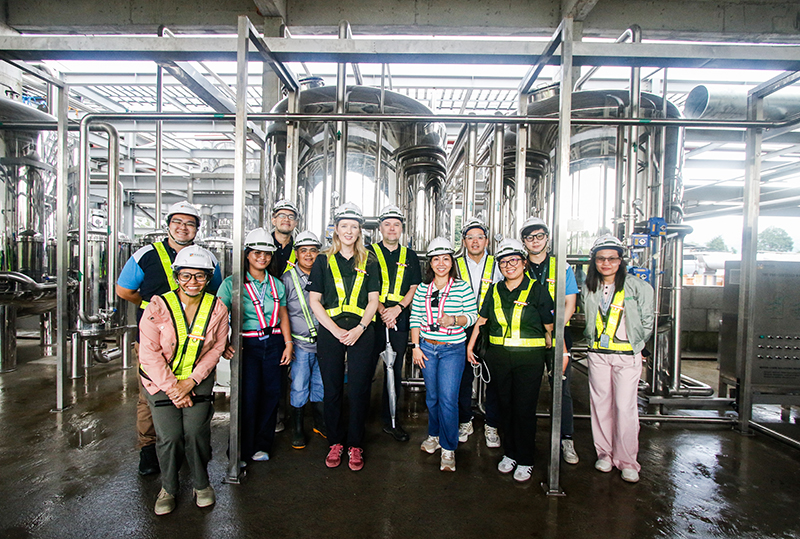
Early results show how ARQ’s targeted investment approach can unlock capital and support growth for businesses with annual revenues of up to ~AUD10 million (US$7m) and investment needs of up to ~AUD 3.5 million (US$2.5m).
ARQ’s investments have helped firms expand operations, enter new markets, and increase hiring. As these firms grow, they attract follow-on investment and signal opportunity to other investors. For example, Water-Chem Solutions Industries, Inc (WACSII) provides water and wastewater treatment solutions that help residential developers and food manufacturers meet strict environmental and water quality standards. With ARQ’s flexible, impact-linked financing, WACSII doubled its sales revenue in less than a year.
ARQ’s story is part of IW’s overall impact. To date, IW’s capital has supported a portfolio of investments into 111 SMEs across sectors such as water, food, hospitality, e-commerce, technology and energy. These include:
- In Vietnam, EasyGop, a pioneering fintech turned healthcare technology company, is now introducing breakthrough solutions for patient support programs.
- In Indonesia, TransTRACK, an end-to-end technology solutions provider for the logistics and transportation industry, gives users real-time monitoring and data analysis for their delivery fleets on fuel usage, traffic patterns and driver performance.
- And in a province in southern Philippines, JMJ Solar, a local renewable-energy supplier, is now expanding into a power provider for the province’s emerging e-vehicle sector.
IW has mobilised nearly AUD31m (US$22) in capital and leveraged an additional AUD463m (US$330m).
WHY IT MATTERS
Better capital flows support resilient economies and stronger markets.
Access to finance remains one of the most persistent barriers to SME growth. When capital reaches firms with strong fundamentals, the effects are immediate and practical: more jobs, higher productivity, and stronger local economies.
IW’s multi-pronged approach of direct deployment of funds coupled with strategic market building shows how public support can catalyse private investment at scale without distorting markets.
For governments and development partners, the lesson is clear: Well-targeted partnerships with influential market actors can expand capital flows, strengthen enterprise performance, and deliver positive economic returns in the near term.