


BACKGROUND
Lack of access to clean, reliable water affects health, education, safety and livelihoods. Unsafe water increases the risk of water-borne disease and poor hygiene. In places where water is not available on site, children lose learning time collecting water or attending schools without a safe supply. Women and girls also face greater safety risks when travelling to collect water. Unreliable water access can also disrupt markets, food preparation and small business activity, with wider effects on household income, productivity and wellbeing.
In Papua New Guinea, around two-thirds of the population, mostly in rural locations, lack access to clean, reliable sources of water. The Australia Papua New Guinea Subnational Program (APSP), implemented by Abt Global, is using locally led solutions to address lack of water security, particularly in schools and markets, in selected provinces across the country. These include East Sepik, Morobe, Western Highlands, Western, Central and Oro Provinces, funded by the Australian government, and the Autonomous Region of Bougainville, funded by the governments of Australia and New Zealand.
THE CHALLENGE
Schools and roadside markets lack access to water
In Morobe Province, three of the 10 schools surveyed by APSP reported having a water source in school grounds, all of which were described as unreliable or insufficient for daily needs. Most schools relied on community wells or offsite sources, with reported round-trip water collection times ranging from short trips to 30 minutes or more, disrupting classes and learning times.
In Bougainville, APSP surveyed seven roadside markets, finding that none had access to toilets for vendors or buyers. Most respondents said they relied on nearby bush or shoreline areas, and all surveyed vendors, many of them women, reported feeling unsafe under those conditions. The surveys in Bougainville indicated that while communities valued existing water infrastructure, they often struggled to maintain it. At three of the seven markets surveyed, damaged taps or vandalised pipes had drained rainwater harvesting systems. In some cases, market fees were collected, but vendors reported little or no maintenance.
THE APPROACH
Localisation at all levels, from construction to oversight
Through APSP, Abt supports practical solutions to water insecurity as well as long-term local management. The program combines rainwater harvesting and governance support to improve conditions in schools and markets.
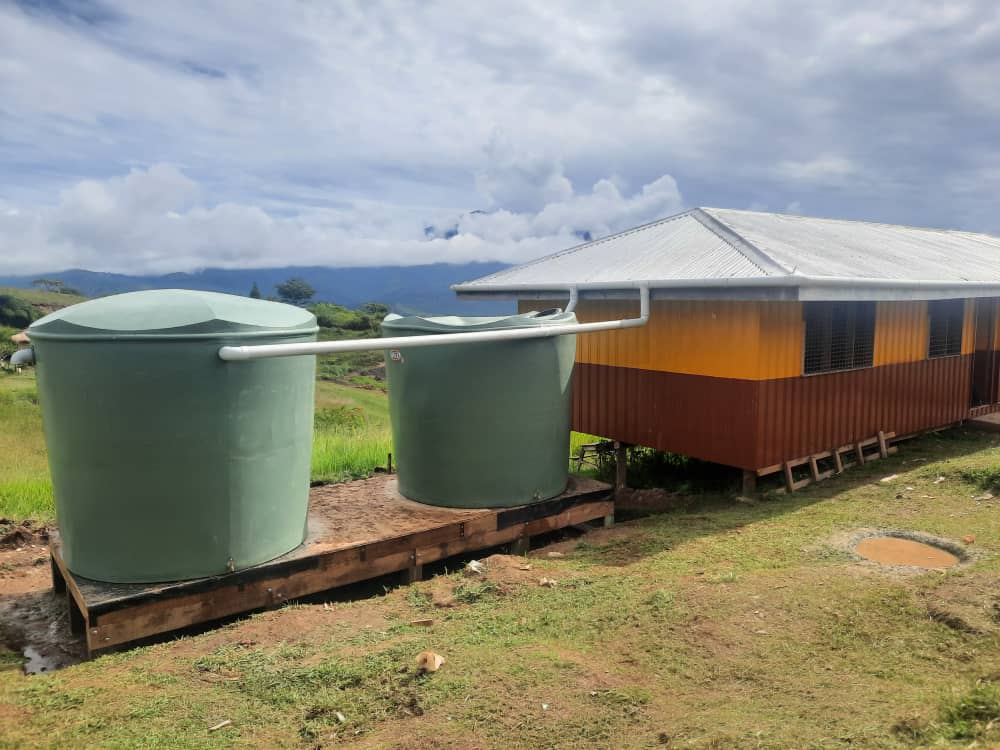
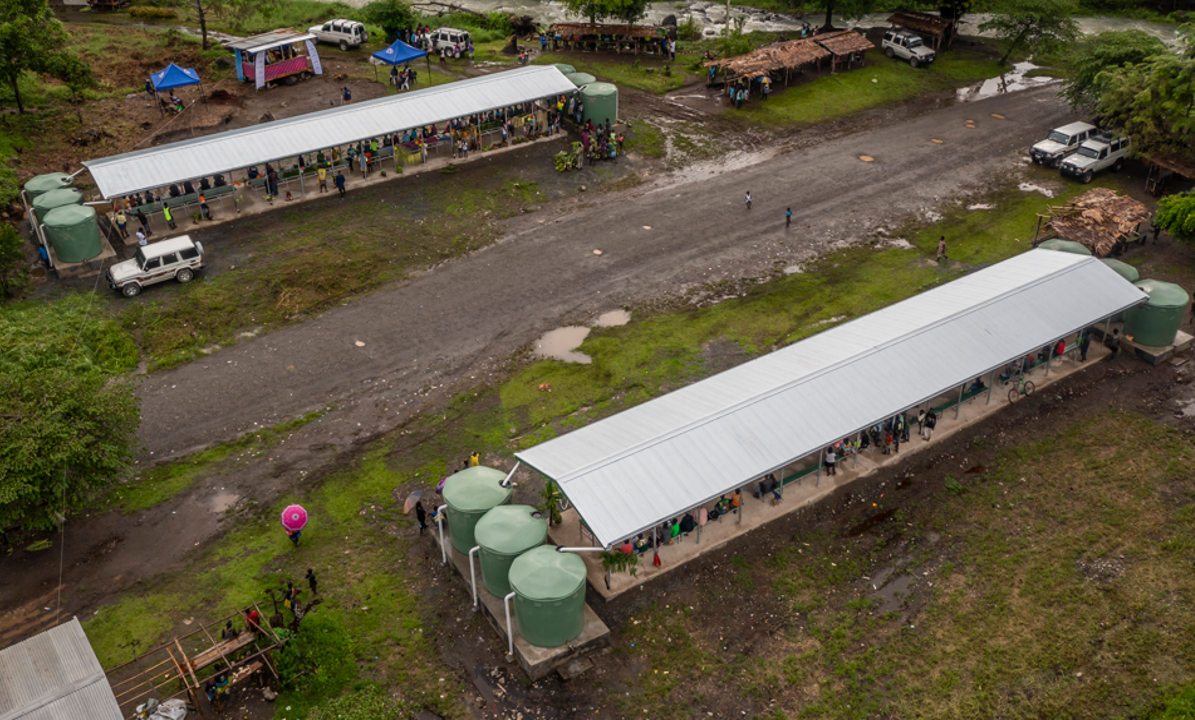
The delivery model uses standardised water security structures and modular rainwater harvesting systems shipped as pre-packed kits and assembled locally. Each structure combines roof catchments with large-capacity storage tanks and usable community space. In markets, for example, the roof catchments provide shelter, while benches and tables underneath support market activities.
Importantly, the work is locally led. In Morobe, the provincial administration co-contributed to project funding and Provincial Working Groups (PWGs) comprising administration personnel and community leaders help select sites based on local priorities. PWGs operate as transparent, locally grounded mechanisms that strengthen provincial ownership and ensure decisions consider benefits for women, children and people with disabilities.
Construction is by locally contracted firms with ongoing management resting with site-level governance actors such as school management boards and market committees. In Bougainville, local construction firms are trained through demonstration builds before being awarded larger contracts. This approach strengthens local construction capacity while improving quality control and long-term ownership.
Scale has been significant. In Morobe alone, 49 structures were installed across 35 elementary schools, bringing a total storage capacity of 882,000 litres to more than 8,000 students. In Bougainville, 76 units were installed at 11 rural markets, as well as 43 schools across in the first phase of the project. Phase two added 28 structures, with a further 30 to be built in phase three. To date, APSP has installed a total of 208 water security systems in East Sepik, Morobe, Western Highlands, Western, Oro and Central Provinces, and the Autonomous Region of Bougainville.
The systems are designed to serve more than one purpose. In Morobe, schools have adapted some water structures into classrooms, administrative offices, and assembly areas. This flexibility increases the value of the infrastructure and helps communities continue using the assets over time.
THE IMPACT
Water security improves learning, safety, and local livelihoods.
The strongest impacts appear in daily routines. In Morobe, all surveyed schools reported that the reliable availability of water on school grounds significantly reduced disruption to classes. Teachers also reported increased student attendance, while several schools saw enrollment rise because families viewed the schools as safer and better equipped. Schools consistently reported improved perceptions of water quality, with teachers and students describing tank water as cleaner and easier to access than previous sources.
In Bougainville, markets also showed visible changes. APSP surveys found that new infrastructure increased participation in local trade, including attracting new vendors who had never previously sold goods at formal markets. Vendors reported that improved access to water, shelter, and seating helped attract more customers and extended trading time. They also reported using stored rainwater for drinking, cooking, washing produce, and handwashing.
WHY IT MATTERS
Community ownership strengthens resilience.
Water infrastructure alone does not guarantee long-term change. APSP’s work emphasises the importance of local ownership for long-term sustainability as well as practical governance and investing in infrastructure that communities can realistically maintain.
These investments do more than improve water access. They reduce time spent collecting water, create safer places to work, support stronger learning environments, and help communities manage shared assets.
For families and local economies, the effects are immediate and practical. More reliable water. Fewer disruptions. Better conditions for learning, livelihoods, and daily life.
Project
Australia Papua New Guinea Subnational Program
Client
DFAT – East Sepik, Morobe, Western Highlands, Western, Oro and Central Provinces, and the Autonomous Region of Bougainville
MFAT – The Autonomous Region of Bougainville