


BACKGROUND
Data accuracy matters for child nutrition
Timor-Leste faces an incredibly high burden of child undernutrition, endangering child survival and long-term healthy development. Almost half of children under five are affected by stunting, one of the highest rates in the world. Poor nutrition, especially in very young children, can have irreversible consequences. Regular nutrition and growth monitoring is a cornerstone of early childhood healthcare.
Nutrition interventions work when they are delivered to those who need them at the right time. These services rely on data with a very high level of precision. Health workers collect anthropometric data—height, weight, and mid-upper arm circumference—then plot and analyse the data against globally accepted growth standards. Height-for-age, weight-for-height, and weight-for-age: Each measurement tells us something important.
Small mistakes in this process can lead to missed early detection of growth faltering or other signals of malnutrition in children. Such gaps have consequences: Misleading health assessments. Improper interventions. Delayed treatment. And ultimately, the possibility of irreversible compromises to lifelong cognitive and health development.
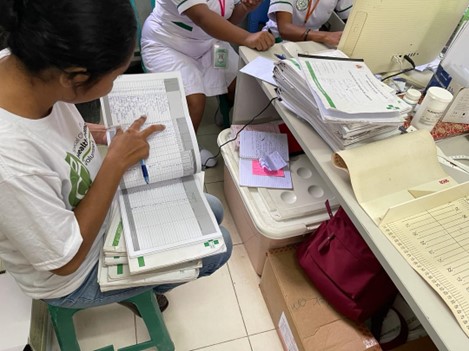
In Timor-Leste, Community Health Centres (CHCs) are the front line of the primary healthcare system and instrumental providers in child health and nutrition services. But CHCs face persistent challenges: limited staff training, high workloads, and lack of practical tools and systems. One result of these challenges is an ongoing concern about health sector data quality in Timor-Leste. Reliance on paper-based forms, registration books, and diagnostic tools means health workers spend excessive time looking for records or filling out forms manually. And manually plotting growth measurements into paper-based Maternal and Child Health Books is error-prone. Reliance on paper-based nutrition documentation led to discrepancies, duplications, and mistakes in the data that was reported and used to make critical decisions.
A typical CHC catchment area has hundreds of young children and might have more than 20 registration books at the health centre. Health workers often had to search through many books to find a child’s record when they arrived for growth monitoring or treatment, which was time-consuming and at times unsuccessful. Health workers also needed to search these same books for monthly reporting. Nutrition Coordinators struggled to manually compile the data and accurately enter it into reporting forms for the national Timor-Leste Health Information System.
WHAT WE'RE DOING
Strengthening power in the data
The Australia Timor-Leste Partnership for Human Development (PHD) was a 10-year Australian Government initiative managed by Abt Global from 2016 to 2026 to support the Government of Timor-Leste in strengthening the delivery of primary healthcare and basic education.
As part of PHD’s primary health care portfolio, Abt worked with the government to support simple but powerful solutions to address system challenges.
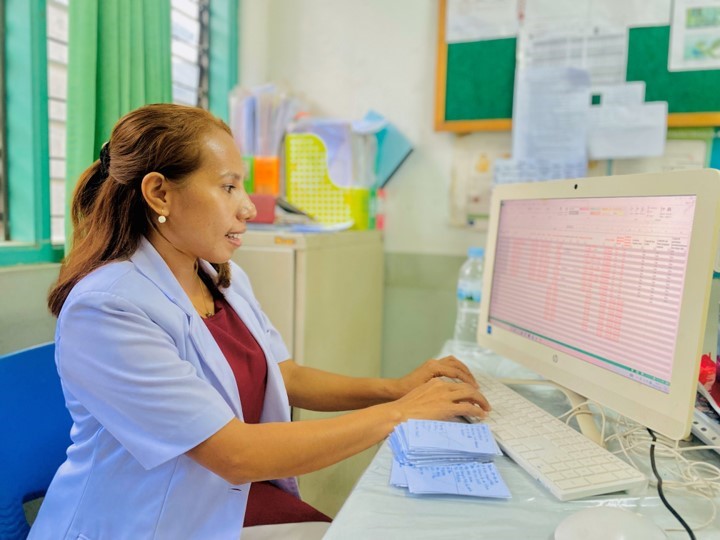
In close collaboration with Ministry of Health service providers, PHD developed a simple and user-friendly nutrition database to replace paper-based processes. The tool included automated analyses that map growth measurements against global z-score standards to accurately assess children’s nutritional status. It also included a feature that determined a child’s eligibility for supplemental nutrition programs. Beyond clinical support for individual children, the tool automatically generated monthly reports, replacing arduous manual data aggregation tasks with a single click, and helping minimise data transcription errors.
The tool was first piloted in two Community Health Centres (CHCs) in 2023 but was expanded to all 17 CHCs across Dili, Ermera, and the Special Administrative Region Oecusse-Ambeno (RAEOA).
“With the database, we only register once, and it automatically shows all children’s nutritional records. Now, we are using the database to assess malnutrition and monitor their growth,” explained Ms Constancia, a Nutrition Coordinator at CHC Atsabe in Ermera.
IMPACT
How better data can help transform health
The new nutrition database significantly improved the accuracy and management of nutrition data. CHCs have ready access to children’s monthly growth monitoring and nutrition historical data. Data quality risks have been greatly reduced, meaning children are more likely to be treated appropriately and community malnutrition rates are better understood.
Nutrition Coordinators reported that with the new system, they were able to register up to 50 children per day at each CHC, since they spend far less time searching for records and more time providing necessary health services. One CHC used the database to ensure follow-up of more than 6,000 registered children to receive growth monitoring and related nutrition interventions. Mr Marcos Quefi, a Nutrition Coordinator from CHC Oesilo in RAEOA, said it had significantly reduced the time needed to complete monthly reporting for the Health Management Information System.
“We can now register patients instantly, access key indicators such as underweight and stunting, and streamline report preparation, which saves time and ensures accurate data transmission into the [national health information system]. The Nutrition Database is a game changer, contributing to nearly 90 percent of our operational efficiency [in child growth monitoring],” said Dr Lola Hornay, Clinical Nutritionist at CHC Becora in Dili.
WHY IT MATTERS
Simple solutions with big results
As part of Australia’s support for strengthening the primary healthcare system, the PHD team worked within the government to address system-level and operational gaps. The introduction of the digital database enabled CHCs to monitor child growth more effectively, detect malnutrition earlier, and provide timely, data-driven health services.
At the time of program closure, the Ministry of Health’s Nutrition Directorate was planning for national expansion of the tool. Improving nutritional status among children under 5 is an incredibly important and cost-effective health intervention. When supported by accurate data and functional CHC systems, this approach has the power to break cycles of malnutrition, improve child survival and development, and build a healthier future for the country.
PROJECT
Australia Timor-Leste Partnership for Human Development
CLIENT
Australia Department of Foreign Affairs and Trade