


HIGHLIGHTS
- Strengthens flood resilience through governance, early warning and planning.
- Supports locally led, nature-based solutions in priority catchments.
- Partners with Government of Fiji to deliver long-term adaptation outcomes.
PROJECT
Fiji Climate Adaptation Program (FCAP)
The Challenge
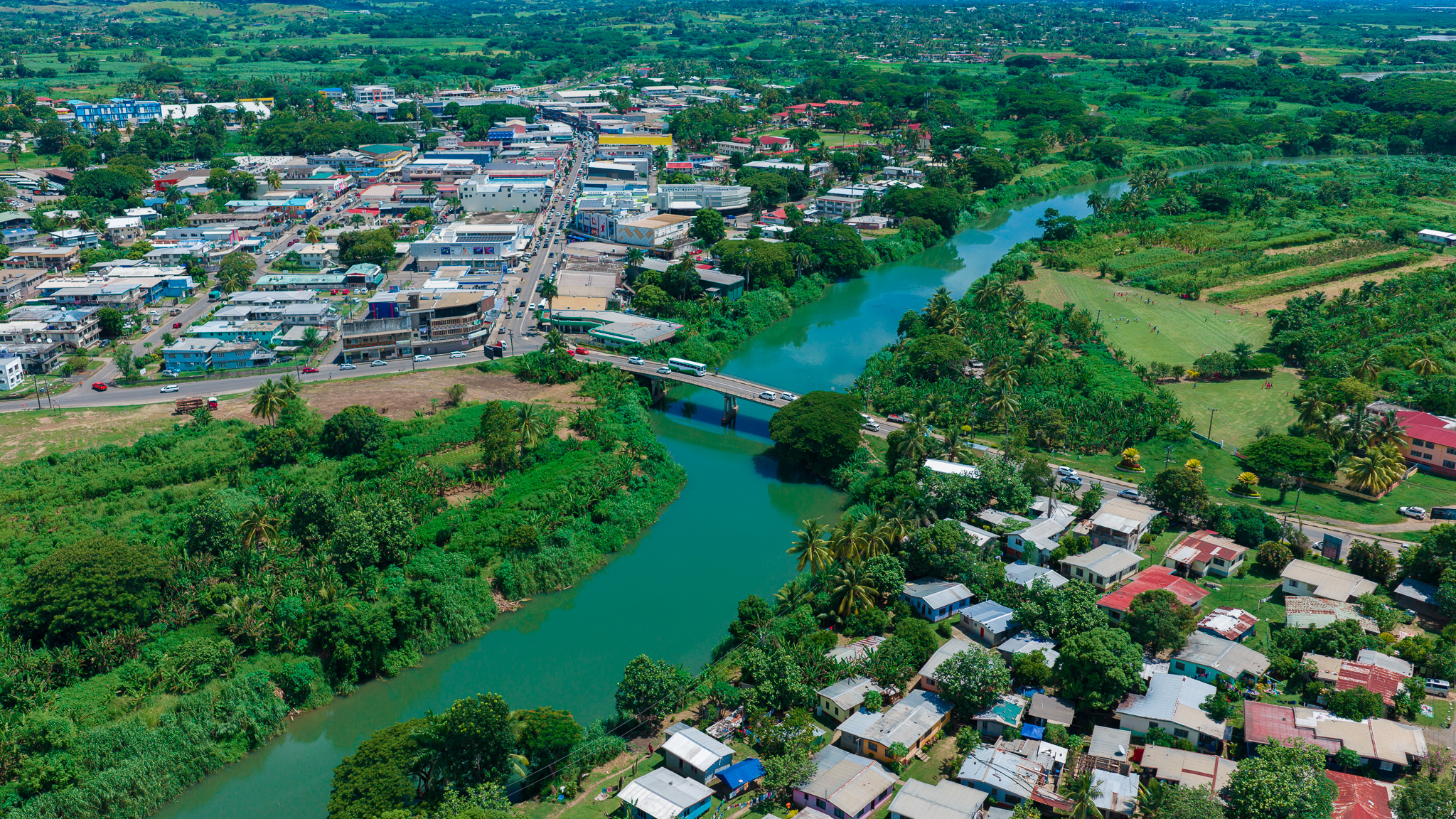
Fiji faces increasing flood risk driven by climate change, rapid urbanisation and gaps in integrated water management. In the Nadi Basin, flooding regularly impacts communities, infrastructure and livelihoods, resulting in significant economic and social consequences.
Alongside major investments, such as the Nadi Flood Alleviation Project (NFAP), there is a critical need for non-structural measures, such as improved land use planning, early warning systems, and community-based adaptation, to reduce risk.
The Approach
The Australian Government’s Fiji Climate Adaptation Program (FCAP) responds to this challenge by strengthening systems, institutions and community-level practices to improve long-term flood resilience.
FCAP works in close partnership with the Government of Fiji to strengthen water governance, land use planning and flood early warning systems. It complements large-scale infrastructure investments under NFAP by focusing on non-structural interventions, including policy reform, technical assistance and capacity building.
The program delivers technical assistance, professional exchanges, and data-driven tools such as flood modelling and hazard mapping. It also supports demonstration projects and community-based initiatives that combine traditional knowledge and science. At the community level, FCAP supports locally led and inclusive solutions, such as nature-based approaches and climate-smart agriculture, through a targeted grants mechanism.
Over time, FCAP will contribute to stronger institutions, improved planning systems, and scalable adaptation solutions that benefit vulnerable communities.
The Results
FCAP aims to reduce flood risk and strengthen climate resilience through two core outcomes. First, Fijian ministries and sub-national administrations improve integrated water governance, land use planning and early warning systems to better manage flood risk. Second, priority communities adopt inclusive, locally led practices that enhance resilience to climate and disaster impacts.
Our Experts